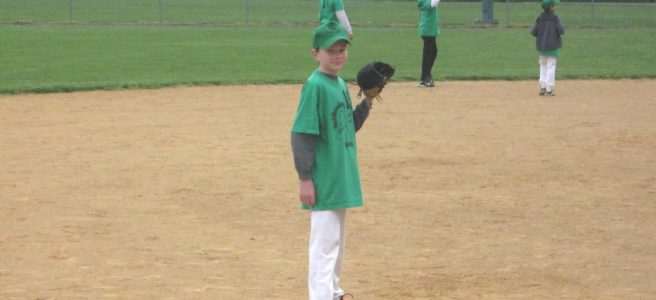
I can safely say that on my college graduation day, I did not expect for one of my future career opportunities to draw on my expertise on baseball cup sizes. But sometimes life requires stepping up to the challenge and expanding one’s boundaries, and this spring and summer I answered the call (figuratively and literally).
Over the past couple of months, I’ve balanced my responsibilities as an employee in the team sports section of a sporting goods store with teaching earth science to sixth grade students. Both roles presented a wealth of opportunities to learn about areas I didn’t study in my journalism classes and pursuits, and beyond that, I embraced chances to simply help customers and students. And sometimes, those requests included baseball cups.
I played one season of rec baseball (in fifth grade, and it was informal enough to the point we only played one other team and utilized six outfielders) and spent most of my baseball career in the “Grasslot,” a makeshift baseball field in my neighborhood drainage area, playing home run derby and two-person wiffle ball. That qualified me to be more of a baseball expert than soccer (the real fan favorite in the sports section), and I learned about everything from the $400 Hypefire baseball bats to ideal softball gloves for different age groups. My identity as an adult dude also seemed to somewhat qualify me to field questions about a sensitive topic relevant to baseball diamonds across America — the baseball cup.
The value of a baseball cup cannot be understated. Baseball players require plenty of gear, but if there’s any piece of equipment or protection required to function without issue in times of need, it’s the cup. A well-fitting cup doesn’t impede the player during the high-speed aspects of baseball games, while also providing an impenetrable barrier against wayward pitches in a player’s most crucial region. Some of them even have camo patterns, which raises a lot of questions in my mind. If you haven’t already picked up from my commentary so far, it’s also a hilarious topic of conversation… but typically outside of the workplace.
Yet duty called a couple of times, whether in the form of phone calls to the department, customers looking to optimize their own baseball experience or family members breaking past the limits of TMI to provide the baseball player in their lives a gift that keeps on giving. I answered these queries to the best of my ability, utilizing everything from the store backstock to the online catalog to measurement apps on my phone to ensure the best option possible for each athlete. And I learned two things: 1) baseball cup manufacturers need more inclusivity in their offerings and 2) I’d take a baseball cup with the number one overall pick in my baseball gear draft. American flag batting gloves are gonna have to wait a bit.
A couple of customers with cup-specific inquiries walked away happy with new gear in their collection, while several others heeded my recommendations to expand their search outside brick-and-mortar stores to find the best cup for them. Either way, we all learned lessons, and maybe a laugh along the way.
Aside from my renewed appreciation of baseball cups, here are some of the lessons I learned about sports (even as a longtime sports enthusiast) from my time in sporting goods retail:
- Lionel Messi is on a one-man tier of superstardom
One constant throughout my tenure in sports retail — the unparalleled interest around Lionel Messi gear. Both his pink Inter Miami kit and iconic Argentina uniform stayed in stock for months, to the point that he had two entire jersey racks, filled to the brim. The soccer shop also featured a towering Messi poster and his signature shoes in five or six different colorways. In comparison, LeBron James had a couple basketballs and shoe styles, Lamar Jackson had purple and black jerseys in stock and Caitlin Clark sparked an uptick in WNBA merch with her selection by the Indiana Fever, but all other athletes combined did not match Messi’s hold over the sporting goods consumer base. In a slight tangent, I entered the role with little knowledge about soccer, but the enthusiasm around the sport was contagious enough that I started playing the EA FC video game on the Nintendo Switch and could tell athletes’ cleats by name in the Copa America final.
- Please instill concussion rules in youth football leagues
Football helmets have evolved, with science and specific ratings helping provide enhanced protection for football players of all sizes and skill levels. Still, I can’t help but wonder — why would parents look to more protective helmets to solve the problem of concussions, instead of just switching sports? A couple of concussions for a grown man in the NFL is cause enough for concern. That same situation for a kid is beyond frightening. Plus, with the ratification of flag football as an official high school sport in several states, the game has healthier alternatives for those with a concerning injury history.
- My thoughts on the costs of youth baseball
If I was a sports parent, baseball wouldn’t be my top choice for my athlete’s sport. The games are lengthy, the sport doesn’t encourage fitness relative to other popular choices, the travel ball schedules are brutal and there are so many games in a season. I’ll add another factor in there — cost of gear. High-end soccer cleats cost plenty, football pads are a pretty significant expense and I’ve learned the hard way that lacrosse can have a high barrier of entry, even for those looking to just give the sport a try. But baseball has to be on another level. I’ve already talked about cups, but the pants, socks, batting gloves and fielding gloves are pretty pricey, even for those who aren’t gunning for a run at making it to the majors. And then there’s the bats. Investing north of $400 for a bat every couple of years to fit in with a player’s teammates is a sure way to break the bank. Here’s my proposal: play at a competitive level that balances the fun of the game with the ability to go to the next level, then invest those big bucks at high school or a higher-stakes level where the rewards of higher-quality gear will have more impact. Plus, there’s always backyard home run derby.
- Sporting goods retail loves a winner
A major reason for my interest in sports was purchasing a Dallas Cowboys Tony Romo jersey from the exact sporting goods store I worked at when I was eight years old. Now that I think about it, even stocking a Cowboys jersey in Washington (now) Commanders territory was a curious choice, but typically the merchandise of pro and college sports teams leans towards the local. I became well-acquainted with Orioles orange, Nationals red and the Capitals’ throwback blue and gold designs, and the arrival of Commanders burgundy and Ravens purple was a fun development as someone who enjoys looking at jerseys. From the consumer standpoint, though, I never realized how much a winner can buoy a sporting goods store’s sales. Orioles gear flew off the shelves with the team’s fast start, and discussions about the fan shop included hopes that the Commanders would have a good season for once. We will see about that last one.
- There should be a sporting goods store with fields or courts
Overall, I’m a big fan of sporting goods stores. Most people, even outside of sports fans, would benefit from taking a stroll through one and touring areas outside of sports, such as apparel, hydration options and lawn games and chairs. For very competitive athletes, great gear can make a big difference, and those looking to break into a new sport can pave the way to an exciting opportunity and hundreds of hours of fun and cardio through purchasing just a couple items (depending on the sport). The overall emphasis on fitness is contagious as well.
But I will say this — a major improvement would be confined areas in which gear can be tested out and the urge to play sports can be satiated. Policing customers shooting baskets on the permanent basketball hoop displays was one of the less enjoyable responsibilities, especially due to my own enjoyment of shooting hoops. It’s very difficult to see a basketball or football and not dribble or throw it. The golf simulator and batting cage get at this, but I’d love to see a special sporting goods store in which pre-opened items are within the area and customers can test them out and shake out their urge to play sports. These areas could be monetized through charging the customers for use and would be well worth the staffing and product required to keep such areas under control. Those areas would also help reduce the amount of merchandise falling from the second to the ground floor — a safety issue no one should have to deal with. Maybe I should save this idea for when Riker Sporting Goods breaks ground one day.
 Riker's Block